
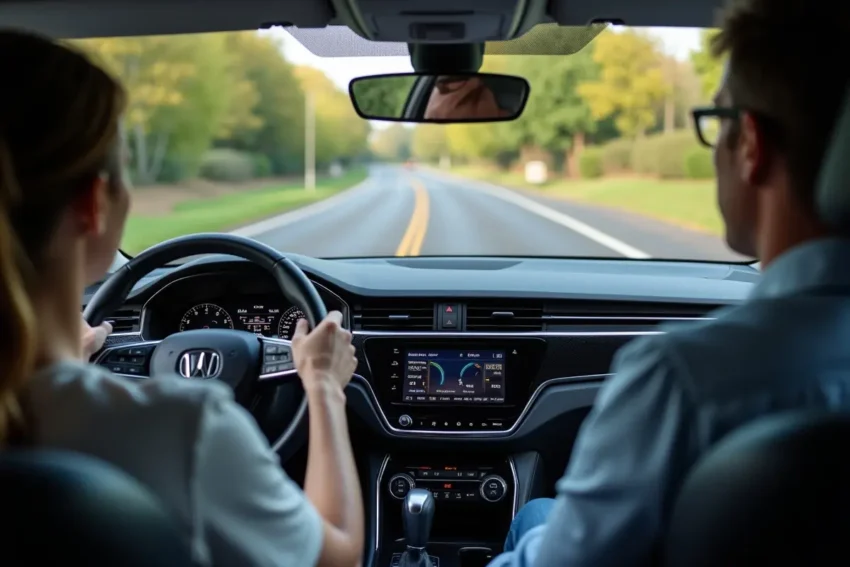
Teaching a teenager to drive is often a test of patience and a rite of passage that feels equal parts exciting and terrifying. We focus so much on the mechanics of signaling and parking that we sometimes overlook the three pillars of safety: speed, space, and following distance.
While we hope our kids never need legal representation after a New Mexico car crash, the best way to protect them is to instill habits that prevent accidents before they happen. Getting these fundamentals right early on makes the difference between a confident driver and a dangerous one.
The Illusion of Speed
For a new driver, doing 40 mph in a 35 mph zone feels negligible. They don’t yet have the “muscle memory” to understand how much an extra 5 or 10 miles per hour changes the physics of a vehicle. You have to explain that speed isn’t just about the number on the dashboard; it is about stopping distance.
When you are practicing with them, have them try to stop at a specific landmark. Then, have them try it again at a slightly higher speed. They will quickly see that even a small increase in velocity requires significantly more pavement to bring the car to a complete halt. Remind them that speed limits are designed for ideal conditions; if it is raining or dark, the number on the sign should be treated as a maximum, not a target.
Creating a Safety Buffer
Space management is perhaps the hardest skill for a novice to master because it requires looking in every direction at once. Beginners tend to have “tunnel vision,” staring directly at the car in front of them. You need to coach them to keep a “space cushion” around the entire vehicle.
Teach them always to have an “out.” If the lane to their left is open, they have a place to go if the person in front slams on the brakes. If semi-trucks or tailgaters box them in, they need to adjust their position. Explain that being surrounded by open asphalt is the safest place to be. This habit of scanning 360 degrees around the car helps them anticipate hazards rather than just reacting to them when it is too late.
The Three-Second Rule
The following distance is where most “fender benders” occur. New drivers often follow too closely because they haven’t developed the depth perception or the reaction time of an experienced adult. The easiest way to teach this is the “three-second rule.”
Have your teen pick a stationary object, such as a sign or a tree. When the car in front of them passes it, they should start counting: one-thousand-one, one-thousand-two, one-thousand-three. If they reach the object before they finish counting, they are too close. In bad weather or at highway speeds, tell them to double that count to six seconds. It sounds like a lot of space, but it provides the vital margin of error they need if traffic suddenly stops.
Staying Calm Under Pressure
Lastly, talk to them about the social pressure of driving. Teens often feel pushed to speed up if someone is tailgating them or to close the gap in traffic so they don’t “lose their spot.” Empower them to stay the course. It is better to let an aggressive driver pass than to compromise their own safety by following too closely or speeding up beyond their comfort zone.
Watching your child pull out of the driveway alone for the first time is nerve-wracking, but knowing you have drilled these safety habits into them provides some peace of mind.
Final Thoughts
Consistent practice and clear communication ensure they stay safe on the road. However, if the unthinkable happens, securing professional representation after a New Mexico car crash ensures that their rights are protected while they focus on recovery. By prioritizing speed control and space management today, you are helping them build a lifetime of safe driving habits.