
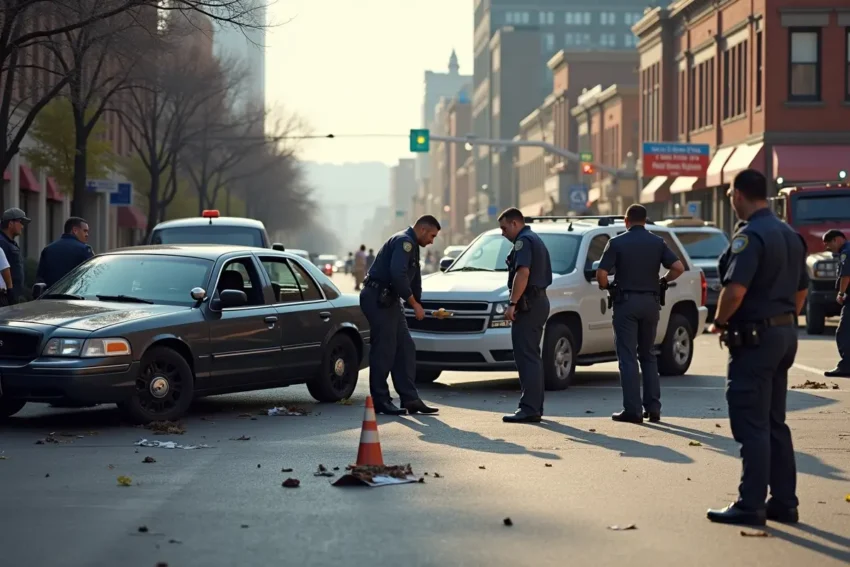
Colorado follows a modified comparative negligence system, meaning compensation depends on each party’s percentage of fault. If fault is unclear or shared, insurance companies often use that uncertainty to reduce or deny claims.
Fault becomes especially disputed in cases involving:
- Multi-vehicle crashes
- Intersection collisions
- Highway accidents
- Pedestrian or bicycle impacts
- Crashes with limited eyewitnesses
In these situations, vehicle accident reconstruction can provide clarity when memory, perception, or testimony is unreliable.
What Is Accident Reconstruction?
Accident reconstruction is a scientific process used to analyze how a crash happened and who caused it. Specialists use engineering principles, physics, and real-world data to recreate the sequence of events leading up to and during a collision.
Unlike opinions or assumptions, crash accident reconstruction relies on measurable evidence and tested methodologies.
Key Evidence Used in Auto Accident Reconstruction
An accident reconstruction expert evaluates multiple forms of evidence, including:
1. Physical Evidence at the Scene
- Skid marks and yaw marks
- Debris distribution
- Roadway geometry
- Traffic signals and signage
- Weather and lighting conditions
This information helps determine braking, steering actions, and vehicle paths.
2. Vehicle Damage Analysis
Damage patterns can reveal:
- Direction and angle of impact
- Relative speeds at collision
- Point of impact between vehicles
This aspect of traffic collision reconstruction is particularly important when drivers give conflicting accounts.
3. Event Data Recorders (Black Boxes)
Many modern vehicles store data such as:
- Speed before impact
- Brake application
- Seatbelt usage
- Throttle position
This data often plays a major role in vehicle accident reconstruction cases.
4. Surveillance and Dashcam Footage
Video evidence can confirm or contradict driver statements and is often combined with reconstruction models to verify timelines and vehicle movements.
How Accident Reconstruction Proves Fault in Colorado
Establishing Negligence
To prove fault, it must be shown that a driver breached their duty of care. Reconstruction can demonstrate behaviors such as:
- Excessive speed
- Failure to yield
- Running a red light
- Unsafe lane changes
- Following too closely
These findings directly support car accident fault in Colorado claims.
Addressing Comparative Fault Arguments
Insurance companies often argue shared responsibility. Accident reconstruction can reduce unfair blame by:
- Separating cause from consequence
- Showing which action triggered the crash
- Clarifying reaction times and avoidance possibilities
This is critical in Colorado, where compensation decreases if a victim is partially at fault.
Supporting Expert Testimony
In contested cases, car accidents reconstruction expert may testify in court, explaining complex data in a way judges and juries can understand. Their testimony often carries significant weight.
When Is Accident Reconstruction Most Valuable?
Not every case requires reconstruction, but it is especially useful when:
- Liability is disputed
- Injuries are severe or permanent
- The insurance stakes are high
- A wrongful death occurred
- Commercial vehicles are involved
In these cases, reconstruction can be the difference between a denied claim and full compensation.
The Role of a Denver Car Accident Lawyer
A skilled Denver car accident lawyer knows when accident reconstruction is necessary and how to use it effectively. Attorneys work with reconstruction specialists to:
- Preserve physical and digital evidence
- Commission accurate reconstruction reports
- Integrate findings into settlement negotiations
- Present compelling arguments at trial if needed
Without proper legal guidance, crucial evidence may be lost before reconstruction can even begin.
Accident Reconstruction and Insurance Negotiations
Reconstruction reports often influence settlement outcomes. When insurers see strong technical evidence proving fault, they are more likely to:
- Accept liability
- Reduce comparative fault claims
- Offer fair settlement amounts
This makes car accidents reconstruction a powerful negotiation tool — not just a courtroom strategy.
Why Accident Reconstruction Matters for Victims
For injured individuals, reconstruction provides:
- Objective proof when stories conflict
- Protection against unfair blame
- A stronger position in settlement or trial
- Confidence that the truth will be established
When injuries affect your health, career, and future, accuracy matters.
Conclusion
Car accidents reconstruction plays a vital role in proving fault in complex Denver crashes. By combining science, technology, and expert analysis, traffic collision reconstruction removes guesswork from the legal process and ensures accountability.
If fault is unclear or contested after a crash, working with a qualified Denver car accident lawyer and an experienced reconstruction expert can significantly strengthen your case and improve your chances of a fair outcome.