
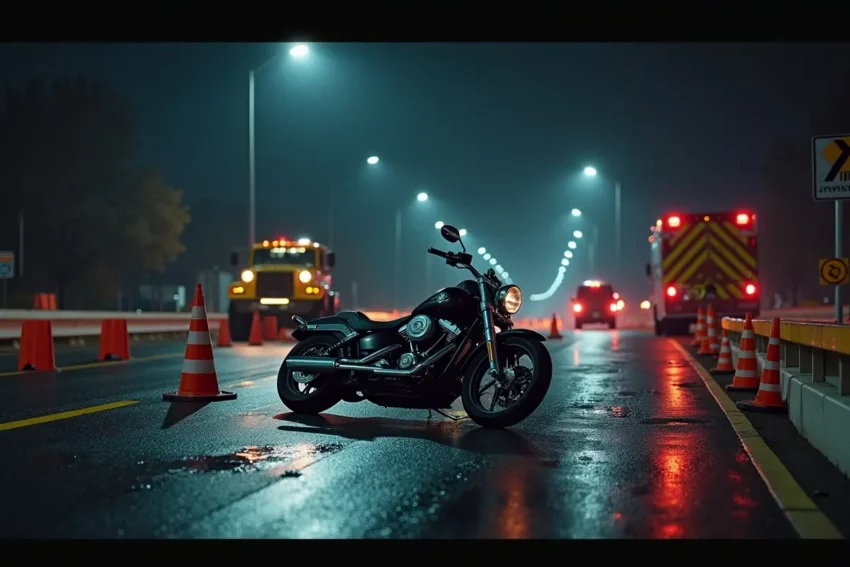
Riding a bike at night brings a certain peace that you just can’t find during the day, but that serenity vanishes the second you hit an unmarked construction trench or a stray orange barrel.
If you have been involved in a motorcycle wreck, legal representation is likely the last thing on your mind while you are sitting on the asphalt checking for broken bones, but it is actually one of the most important factors in recovering your losses. These accidents are jarring, confusing, and often result in serious injuries that require immediate action.
The Immediate Aftermath: Safety First
The moments following a crash in a dark construction zone are perilous. Because the lighting is poor, other drivers might not see you or your bike lying in the road. Your first priority is getting yourself to a safe spot, even if that just means dragging yourself to the shoulder or behind a concrete barrier. If you can move, try to signal oncoming traffic with a flashlight or your phone light, but do not put yourself back in the line of fire to save the bike.
Once you are out of the immediate path of traffic, call 911. Even if you think you just have a few scrapes, the adrenaline of a crash can mask serious internal injuries or concussions. A police report is also a non-negotiable requirement. When the officer arrives, make sure they note that the area was poorly lit and that the construction hazards were not properly marked.
Why Construction Zones are Death Traps for Riders
For someone in a car, a vertical lip in the pavement or a bit of loose gravel is a minor bump. For a motorcyclist, it is a recipe for a high-side crash. Construction companies have a legal obligation to make sure their work sites are safe for all road users, not just trucks and SUVs. This includes using reflective tape on barriers, ensuring warning signs are placed far enough back for a rider to react, and using overhead lighting when work is being done at night.
When these companies cut corners on lighting, they turn a routine ride into an obstacle course. If there were no blinking lights or if the signs were covered in dust and grime, the contractor might be liable for your medical bills and bike repairs. Shadows in construction zones can hide deep potholes or “milled” pavement that can catch a front tire and send a rider sliding before they even know what happened.
Gathering Evidence in the Dark
The scene of a construction accident changes fast. By the time the sun comes up, the crew might move the barrels or fix the burnt-out light, effectively erasing the evidence of their negligence. If you are physically able or have a friend with you, take as many photos and videos as possible right then and there.
Focus on the lack of visibility. Take photos from the perspective of a rider approaching the zone to show exactly how invisible the hazard was. Look for things like missing reflectors, knocked-over signs, or deep ruts in the dirt that were left unprotected. If there are any witnesses, such as other drivers or nearby residents who heard the crash, get their names and phone numbers. Their testimony about the “blackout” conditions of the road can be the backbone of your claim.
Navigating the Insurance Maze
Dealing with insurance companies after a motorcycle crash is notoriously difficult. There is an unfortunate bias against riders, where adjusters often assume the motorcyclist was speeding or riding recklessly. When you add a construction company and a government municipality into the mix, the finger-pointing starts almost immediately. The construction firm will blame the city, and the city will blame the rider.
You should avoid giving a recorded statement to any insurance adjuster until you have stabilized and sought advice. They are looking for any reason to say you “should have seen” the hazard, regardless of how dark it was. Remember that the insurance company’s goal is to settle for the lowest amount possible, which rarely covers the long-term costs of road rash, nerve damage, or a totaled bike.
Establishing Liability and Fault
Proving that a construction zone was “not well-lit” requires more than just your word. It often involves reviewing the contract between the city and the construction company to determine which safety standards they were required to follow. If the blueprints called for temporary streetlights and they weren’t functioning, that is a massive red flag.
An experienced professional can help reconstruct the scene and determine if the signage met the Manual on Uniform Traffic Control Devices (MUTCD) standards. This is a set of federal and state rules that dictate exactly how construction zones must be marked. If the crew failed to follow these rules, they are likely responsible for the damages you suffered.
Final Word: Moving Forward and Healing
Recovery after a nighttime wreck is about more than just physical therapy. It is about getting your life back on track and ensuring you aren’t stuck with thousands of dollars in debt for an accident that wasn’t your fault. While you focus on healing, you need someone to handle the heavy lifting of the legal process. Securing the right motorcycle wreck legal representation ensures that the companies responsible for the dark, dangerous road are held accountable for their negligence. Don’t let a contractor’s mistake at a dark job site end your riding days for good.