
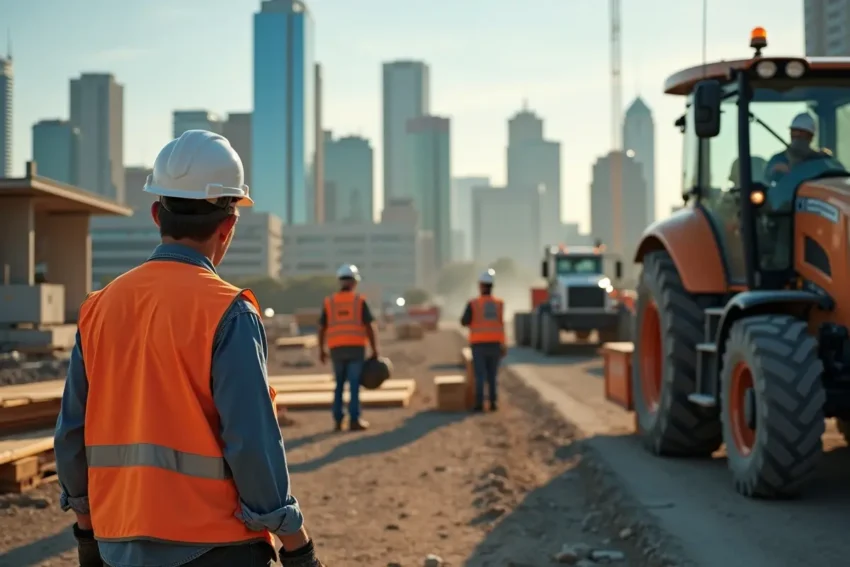
Austin continues to expand at a fast pace. New residential towers, office buildings, and infrastructure projects are underway across the city. This rapid development creates steady work for construction crews, although it also increases exposure to workplace hazards. Construction remains one of the most dangerous industries in Texas, and local workers face real risks every day.
Looking at construction injury statistics helps explain the challenges workers encounter. While exact city-only fatality numbers for Austin are limited in public databases, statewide data from the U.S. Bureau of Labor Statistics gives strong insight into what is happening locally. Since Austin contributes heavily to Texas construction growth, these trends directly impact the city’s workforce.
Injury Numbers Across Austin Job Sites
Texas reported 564 total workplace fatalities in 2023, according to the U.S. Bureau of Labor Statistics. The state’s fatal injury rate was 4.1 deaths per 100,000 full-time workers, which is higher than the national average. Construction consistently ranks among the top industries for these fatalities.
Construction accounts for roughly 20% of all workplace deaths nationwide, and Texas follows a similar pattern. With Austin experiencing continuous commercial and residential expansion, the city reflects these statewide risks. More active job sites mean greater exposure to falls, equipment accidents, and transportation incidents.
When serious injuries happen, workers often seek legal guidance to better understand their rights and available options after a construction accident. Service providers such as Zinda Law Group assist injured individuals in reviewing their cases and exploring possible legal remedies.
Falls Continue to Dominate Statistics
Falls remain the leading cause of death in the construction industry. National data shows that about 37% of all construction fatalities are caused by falls from heights. This includes falls from ladders, scaffolding, roofs, and structural frames.
Austin’s skyline growth increases fall exposure. Multi-story residential and commercial projects require crews to work at elevated heights daily. Even small mistakes can lead to severe injuries such as broken bones, spinal damage, or traumatic brain injuries.
Proper fall protection systems significantly reduce these numbers. Guardrails, safety nets, and personal fall arrest systems are proven to lower fatality risks when used correctly and consistently.
Equipment and Struck-By Incidents on Local Projects
Heavy equipment plays a central role in modern construction across Austin. Cranes, forklifts, dump trucks, and excavators move materials quickly through busy job sites. Transportation-related incidents remain one of the leading causes of workplace deaths in Texas.
Struck-by accidents also contribute significantly to injury totals. These incidents occur when workers are hit by moving vehicles, falling tools, or shifting materials. On large projects where multiple subcontractors operate at once, coordination challenges increase these risks.
State data shows that transportation incidents and contact with objects or equipment consistently rank among the top fatal injury events. As Austin continues road expansion and infrastructure upgrades, these dangers remain present.
Heat and Overexertion in Central Texas Conditions
Austin’s climate adds another layer to construction safety statistics. Texas regularly reports heat-related workplace illnesses due to high summer temperatures. Long shifts in direct sunlight increase dehydration risk, fatigue, and reduced alertness.
Overexertion injuries also appear frequently in injury reports. Lifting heavy materials, repetitive movements, and extended physical labor cause strains and sprains. While these injuries may not always be fatal, they account for a large share of nonfatal workplace cases that require time off work.
Employers who provide water breaks, shaded rest areas, and task rotation help reduce these risks. Heat awareness training has become more common across Texas construction sites as temperatures continue to rise.
Factors That Influence Injury Rates
Several elements influence construction injury patterns in Austin. Rapid population growth leads to overlapping projects throughout the city. When timelines are tight, crews may rush to meet deadlines, increasing exposure to hazards. Texas consistently ranks among the states with the highest number of workplace fatalities overall. As one of the largest states by workforce size, higher absolute numbers are expected. Still, the fatal injury rate of 4.1 per 100,000 workers shows room for improvement compared to lower-rate states.
Key factors that influence injury rates include:
- Fast-paced project schedules that reduce time for safety checks
- Multiple subcontractors on one site, leading to coordination gaps
- Limited training for new workers entering a growing industry
- Inconsistent enforcement of safety standards
- Equipment maintenance delays that increase mechanical risks
- High-traffic construction zones near active roadways
Addressing these issues directly can lower injury numbers across Austin job sites.
Comparing Austin to Statewide and National Trends
Nationwide, construction remains one of the most hazardous industries. The fact that construction accounts for nearly one in five workplace deaths highlights the seriousness of the issue. Texas mirrors this pattern due to its large workforce and ongoing development.
Austin’s construction boom means the city reflects statewide data trends. As more residential towers and commercial spaces rise, the total number of workers exposed to hazards increases. Even if safety programs improve, growth alone can raise total injury counts. Tracking rates rather than only total numbers provides clearer insight. Reducing the fatal injury rate below 4.1 per 100,000 workers would signal measurable progress for Texas and cities like Austin.
What’s Ahead for Austin Construction Safety
Austin’s development shows no signs of slowing. As the city expands, construction crews will continue shaping its skyline and infrastructure. With this growth comes the responsibility to strengthen safety systems and reduce preventable injuries. Data shows that falls, transportation incidents, and equipment contact remain the leading causes of fatalities.
Focused prevention efforts in these areas can make a significant difference. Clear training, strong supervision, and consistent enforcement of protective measures support safer job sites. Improving construction safety is not only about compliance. It is about protecting the people who build Austin every day. By paying attention to real statistics and acting on them, the city can move toward lower injury rates and a stronger, safer workforce.