
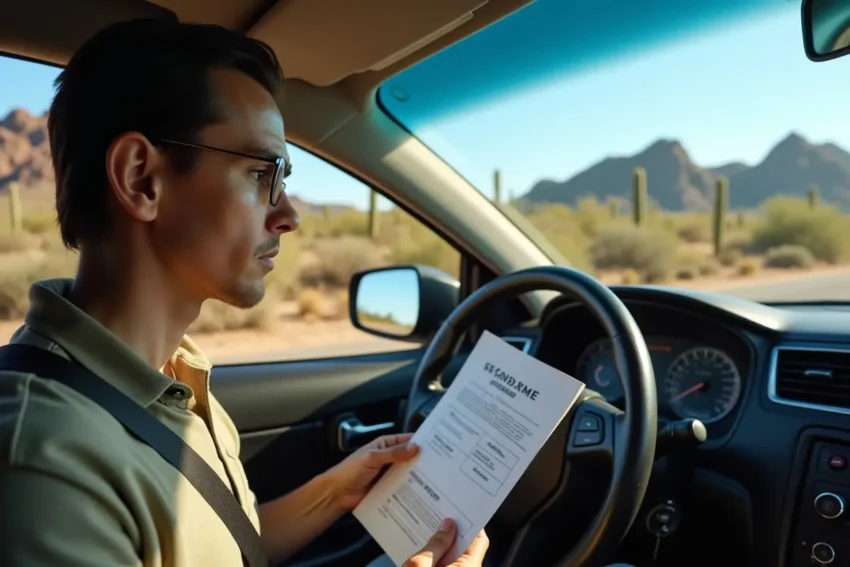
Arizona highways have a way of making speed feel deceptively harmless. The long desert stretches along Interstate 10 and Interstate 17 can seem endless, especially when traffic is light and visibility is clear for miles. Drivers heading back from Sedona, Flagstaff, Las Vegas, or even a routine commute through Maricopa County often drift well beyond the posted limit without realizing how quickly Arizona law escalates the situation.
In many states, driving 85 mph results in a costly ticket.
In Arizona, it can leave you with a criminal record.
That distinction catches countless drivers off guard every year — particularly visitors and out-of-state motorists who assume speeding violations work the same way everywhere else.
They do not.
Arizona Treats Certain Speeding Violations as Criminal Offenses
Most drivers think of speeding as a civil traffic issue. Pay the fine, maybe attend traffic school, move on.
Arizona draws a much sharper line.
Under Arizona law (ARS § 28-701.02), excessive speeding becomes a criminal misdemeanor under specific conditions. One of the biggest traps is the state’s strict 85 mph threshold.
The 85 MPH Rule
In Arizona, driving faster than 85 mph anywhere in the state automatically qualifies as criminal speeding, regardless of:
- Road conditions
- Traffic levels
- Weather conditions
- The posted speed limit
That means even on a 75-mph freeway section of I-10 or I-17, exceeding the speed limit by only 11 mph can instantly transform a normal traffic stop into a criminal case.
Many drivers never see it coming.
Criminal Speeding Is More Than “Just a Ticket”
This is where the situation becomes serious.
A criminal speeding charge is classified as a Class 3 misdemeanor, which means it carries consequences beyond fines and license points.
Potential penalties can include:
- Up to 30 days in jail
- Probation for up to one year
- Significant fines and court surcharges
- Points added to your driving record
- A permanent criminal record
And that last part matters more than most people realize.
Arizona does not offer a traditional expungement system for criminal convictions. Once a misdemeanor conviction hits your record, it can appear during:
- Employment background checks
- Professional licensing reviews
- Housing applications
- Security clearance investigations
For many first-time offenders, the long-term record damage becomes far more concerning than the original traffic stop itself.
Why the Court Handling Your Case Matters So Much
Drivers often assume all traffic courts operate the same way.
Arizona Justice Courts do not.
If you are cited for criminal speeding on I-10 or I-17, your case will likely be assigned based on the exact location where the stop occurred. That means the outcome of your case can depend heavily on geography.
A few miles can completely change:
- The prosecutor handling the case
- The judge overseeing proceedings
- Local negotiation practices
- Sentencing tendencies
Rural Justice Courts often handle highway cases differently than urban courts, and outcomes can vary significantly.
In more complex situations, having an Arizona criminal speeding lawyer who understands local court practices can make a meaningful difference in how the case is handled and resolved.
Rural Justice Courts Often Handle Highway Cases
Because I-10 and I-17 cross multiple counties, drivers may end up assigned to courts far outside metropolitan areas.
Cases are commonly routed through courts serving regions such as:
- Western Maricopa County
- Yavapai County corridors near Black Canyon City
- Pinal County freeway stretches
- Rural highway precincts with heavy DPS enforcement
These courts frequently operate very differently from large city municipal courts.
Some are known for aggressive prosecution strategies or stricter probation requirements, especially in areas where highway enforcement is a major focus.
You Usually Cannot “Just Pay Online” and Move On
One of the biggest misconceptions about criminal speeding involves resolution.
Civil tickets are often simple:
- Pay online
- Attend defensive driving school
- Close the case
Criminal speeding does not work that way.
Court Appearance Is Mandatory
When charged with criminal speeding, you are generally required to appear in court for an arraignment and formally enter a plea.
Ignoring the citation creates much bigger problems.
Failure to appear can lead to:
- Bench warrants
- License suspension
- Additional penalties
- Escalating court complications
For out-of-state drivers, this becomes especially stressful because returning to Arizona for multiple court dates may not feel realistic.
Defensive Driving School Is Not Guaranteed
Arizona allows traffic school for many civil violations, but criminal speeding is different.
You are not automatically entitled to defensive driving school as a dismissal option.
In many Justice Courts, approval must come directly from:
- The prosecutor
- The judge
- Or both
That means outcomes vary dramatically depending on the court and the circumstances surrounding the stop.
Why Criminal Speed Cases Often Become Technical Battles
Most successful defenses are not based on emotional arguments or excuses.
They focus on evidence.
Experienced defense attorneys often examine whether the state can actually prove the alleged speed under strict legal standards.
Radar and LiDAR Devices Must Be Properly Maintained
Arizona DPS officers heavily rely on:
- Radar systems
- LiDAR laser devices
- Calibration testing procedures
Those systems require documented maintenance and periodic calibration.
A defense lawyer may request:
- Calibration logs
- Maintenance records
- Tuning fork verification records
- Device testing documentation
If those records are incomplete or outside required compliance windows, the prosecution’s evidence may weaken significantly.
In some cases, the speed reading itself becomes vulnerable to challenge.
Many First-Time Cases Aim for Civil Reduction Agreements
For drivers without serious prior offenses, the primary legal strategy is often avoiding a criminal conviction entirely.
This usually involves negotiating a reduction from:
- Criminal misdemeanor speeding
to - A standard civil traffic violation
That distinction changes everything.
A successful reduction may help drivers:
- Avoid a criminal record
- Eliminate misdemeanor exposure
- Resolve the matter through fines instead of criminal penalties
- Protect employment and professional opportunities
But these outcomes rarely happen automatically.
Negotiation strategy, local court familiarity, and procedural timing all matter.
Out-of-State Drivers Face Additional Risks
Tourists and visitors are especially vulnerable because Arizona’s speeding laws are far stricter than what many other states enforce.
Drivers returning home to:
- California
- Nevada
- Utah
- Texas
- Colorado
often assume the matter can wait.
Meanwhile:
- Court deadlines approach
- Warrants become possible
- Driving privileges may be affected
By the time many drivers realize the charge is criminal, the legal process is already moving forward.
Timing Matters More Than Most People Think
One of the biggest mistakes drivers make is waiting until the arraignment date to start dealing with the situation.
That delay limits legal options.
Early intervention allows attorneys to:
- Communicate with prosecutors sooner
- Review evidence before hearings
- Explore diversion opportunities
- Address scheduling concerns for traveling drivers
The earlier a strategy begins, the more flexibility usually exists.
A Criminal Speeding Charge Does Not Automatically Define the Outcome
Getting stopped on I-10 or I-17 for excessive speed feels overwhelming, especially for drivers who have never dealt with the criminal court system before.
But the citation itself is not the final outcome.
Arizona criminal speeding cases often hinge on:
- Technical evidence
- Court-specific procedures
- Negotiation experience
- Early legal action
And because every Justice Court operates differently, understanding the local court culture can be just as important as understanding the law itself.
For many drivers, the real priority is simple: keeping a temporary mistake from becoming a permanent criminal record.