
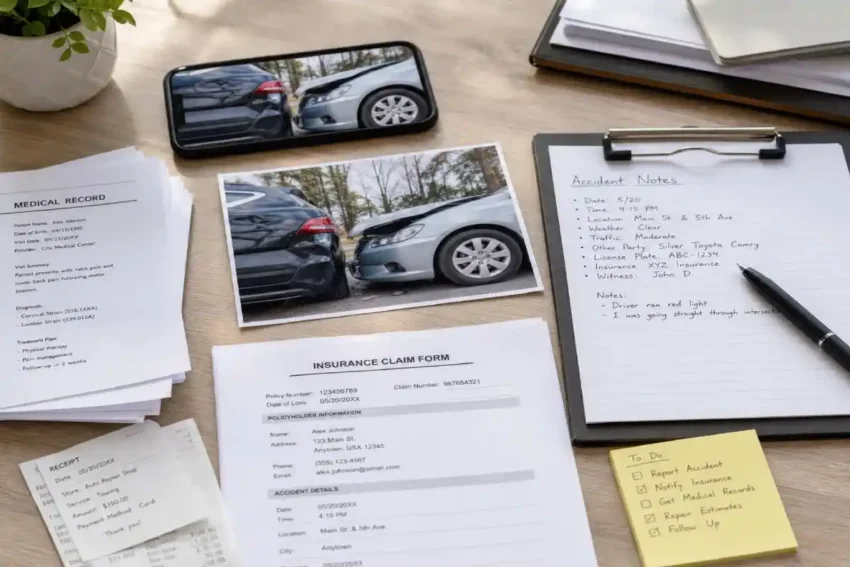
A car crash can turn from a minor headache into a serious legal and financial mess within just a few days. What happens in the moments right after a collision affects more than physical safety—it can shape the strength of any insurance or injury claim that follows. This article walks through what to document, preserve, and avoid after a crash. Consider a common scenario: a driver walks away from a low-speed rear-end collision feeling fine, only to develop neck pain three days later. Without proper documentation, connecting that pain back to the crash becomes an uphill battle.
Why the First Hours After a Crash Matter
Immediate priorities: safety, medical care, and official reporting
When injuries, disputed fault, or an uncooperative insurance company enter the picture, talking to a car accident lawyer can help clarify the options available. This guide focuses on avoiding common mistakes, not on legal solicitation.
Emergency concerns come first—checking for injuries, moving vehicles out of danger, calling for help. Once those immediate safety needs are handled, protecting a future claim becomes the next order of business. Visible damage rarely tells the whole story; injuries and mechanical problems often don’t show up until later. Even if someone feels fine at the scene, a medical evaluation is worth the trouble, since adrenaline has a way of masking pain. And when police respond, getting an official crash report gives you a neutral, third-party record of what happened.
Common mistakes that weaken a claim
- Leaving the scene before exchanging information
- Skipping photographs of damage or road conditions
- Delaying medical care
- Repairing or discarding damaged items too soon
- Failing to keep records of insurer conversations
First 10 Minutes / First 24 Hours
In the first ten minutes: check for injuries, move to safety, and call authorities if needed. Within the first 24 hours: seek medical attention, gather documentation, and notify your insurer with factual, limited information.
What Evidence to Gather at the Scene
Photos and video that help document the crash
Photograph all vehicles from multiple angles, then move in for close-ups of damage, skid marks, debris, traffic signs, and weather conditions. Date-stamped images and short video clips add a layer of credibility and context that memory simply can’t match.
Information to collect from others involved
Gather names, contact details, insurance information, license plate numbers, and vehicle descriptions. Note contact information for any witnesses, along with the responding officer’s name and police report number.
Written notes while memory is fresh
Jot down the time, location, direction of travel, and sequence of events. Record what people said without adding your own assumptions, and note anything unusual, like poor visibility or road hazards. A witness statement or even a single clear roadway photo can later settle disputes about who had the right of way.
Medical Documentation and Injury Tracking
Why medical records matter
Prompt treatment protects your health while simultaneously creating an official record that ties your injuries to the crash. Emergency treatment, follow-up visits, and physical therapy each add a piece to that record. Some injuries—soft-tissue damage and concussion symptoms in particular—can worsen or simply not appear until days later.
What to keep
Save doctor and hospital records, imaging results, bills, prescriptions, and treatment plans. A symptom journal tracking pain, mobility, sleep, and missed activities adds valuable day-to-day context that formal records can’t always capture.
How to describe symptoms clearly
Describe pain and limitations factually—resist the urge to exaggerate or downplay. Note how injuries affect work, driving, or everyday tasks, since this kind of detail can matter later.
Documenting Property Damage and Financial Losses
Vehicle damage and repair records
Keep repair estimates, invoices, and towing receipts. Photograph the damage before repairs begin, and hang onto damaged parts if it’s practical to do so.
Other out-of-pocket expenses
Track rental costs, prescription expenses, transportation to appointments, and lost wages—ideally backed up with employer documentation. Save receipts for any replaced personal property as well.
Organizing records effectively
Keep a dedicated folder—physical or digital—for all photos, bills, and correspondence. Back up digital files in more than one place, and send copies rather than originals to insurers.
How to Communicate With Insurance Companies
What to do when the insurer contacts you
Stay polite and stick to the facts. Share only what’s necessary, and avoid guessing about fault or how severe an injury might be. Log the date, time, and substance of every call or message.
What not to do
Avoid signing anything you don’t fully understand, agreeing to a quick settlement before injuries are clear, or relying solely on verbal promises. Keep every record, even after you’ve already sent it once.
When legal guidance may be helpful
A car accident lawyer may become relevant when liability is disputed, injuries are significant, or an insurer starts delaying or downplaying a claim. Processes and requirements vary by state and policy, so context matters quite a bit here.
When Evidence Is Hard to Get
Situations that create gaps
Poor lighting, no witnesses, moved vehicles, or delayed symptoms can all leave holes in your documentation.
What if I didn’t get photos?
Medical records, repair estimates, and personal notes can still help build a timeline. Check for a police report, nearby security or traffic cameras, and any saved texts or emails related to the crash. A claim can still be well-supported even without picture-perfect scene documentation.
Helpful Checklist for Readers
- Take photos and video
- Collect witness and insurance information
- Seek medical attention promptly
- Save all records and receipts
- Keep a symptom journal
- Track every insurer communication
- Avoid pressure toward an early settlement
- Preserve damaged items until the claim resolves
A Practical Example of a Well-Documented Claim
Consider a rear-end collision with only modest visible damage. The driver photographs the scene, sees a doctor within two days once neck stiffness sets in, and keeps a repair estimate alongside a daily symptom journal. Together, these records are what separate a simple inconvenience from a legitimate, compensable injury claim—turning a vague timeline into a clear, well-supported narrative.
Final Guidance for Next Steps
Protecting your health, preserving evidence, and keeping organized records remain the most important steps after any crash. Every situation is different, but the quality of your documentation often matters more than memory alone ever could. When injuries, fault disputes, or insurer resistance complicate matters, speaking with a car accident lawyer can help clarify the options on the table. Careful documentation is what turns a confusing, stressful event into a clearer, more manageable process.